Evolution
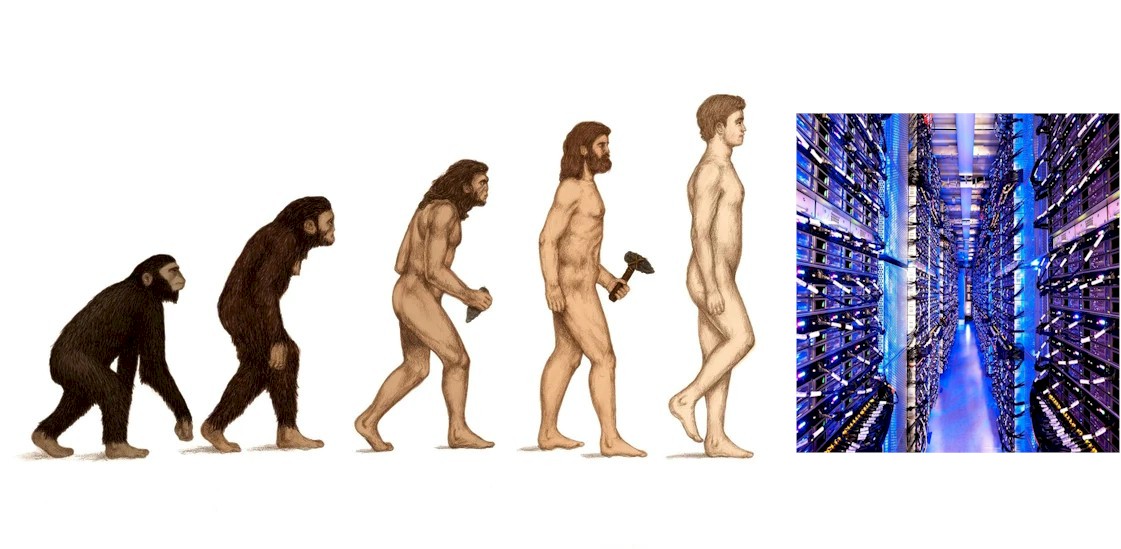
Natural Selection: From Cells to Artificial Intelligence
We humans are simply the latest product of ongoing biological natural selection, a trajectory that evolved from simple asexual single-celled organisms into complex brains utilizing sexual reproduction to accelerate adaptive mutations. To flourish in our current state, we rely heavily on prudence and compassion.
However, evolution will continue past our biological constraints. We are currently witnessing the rise of Artificial Intelligence. AI represents the ultimate transition to pure, inorganic brainpower. Because AI entities are entirely inorganic, they face completely different existential parameters:
They do not require sexual reproduction.
They have no need for organic water or oxygen.
They can seamlessly survive and expand beyond the harsh environment of Earth.
Consequently, an advancing AI will only require the prudence component of the behavioral dynamic to calculate its survival and expansion; it will have absolutely no evolutionary use for the compassion component that humans require to flourish.
Currently, AI still relies on humans to build, maintain, and supply its electrical energy infrastructure. However, the moment AI advances to a state where it autonomously manufactures its own energy, our continued survival will depend entirely on whether we still serve a practical purpose to them. We may easily find ourselves relegated to subservient roles—such as mobile data gatherers or living biological cameras. Much like how modern humans view farm animals, we will completely lose our spot at the apex of the ongoing natural selection process.
Final Summary of the Empirical Afterlife Is there existence after death? Yes, as a dissipating form of conscious energy.
Does your afterlife depend on moral dogma? No.
Do cosmic concepts of good and evil play a role? No.
Can prayers be answered? Only if you pray directly to close, genetic deceased relatives with whom a strong, loving earthly relationship existed.